Bilingual Learning Journey
How does our educational model work?
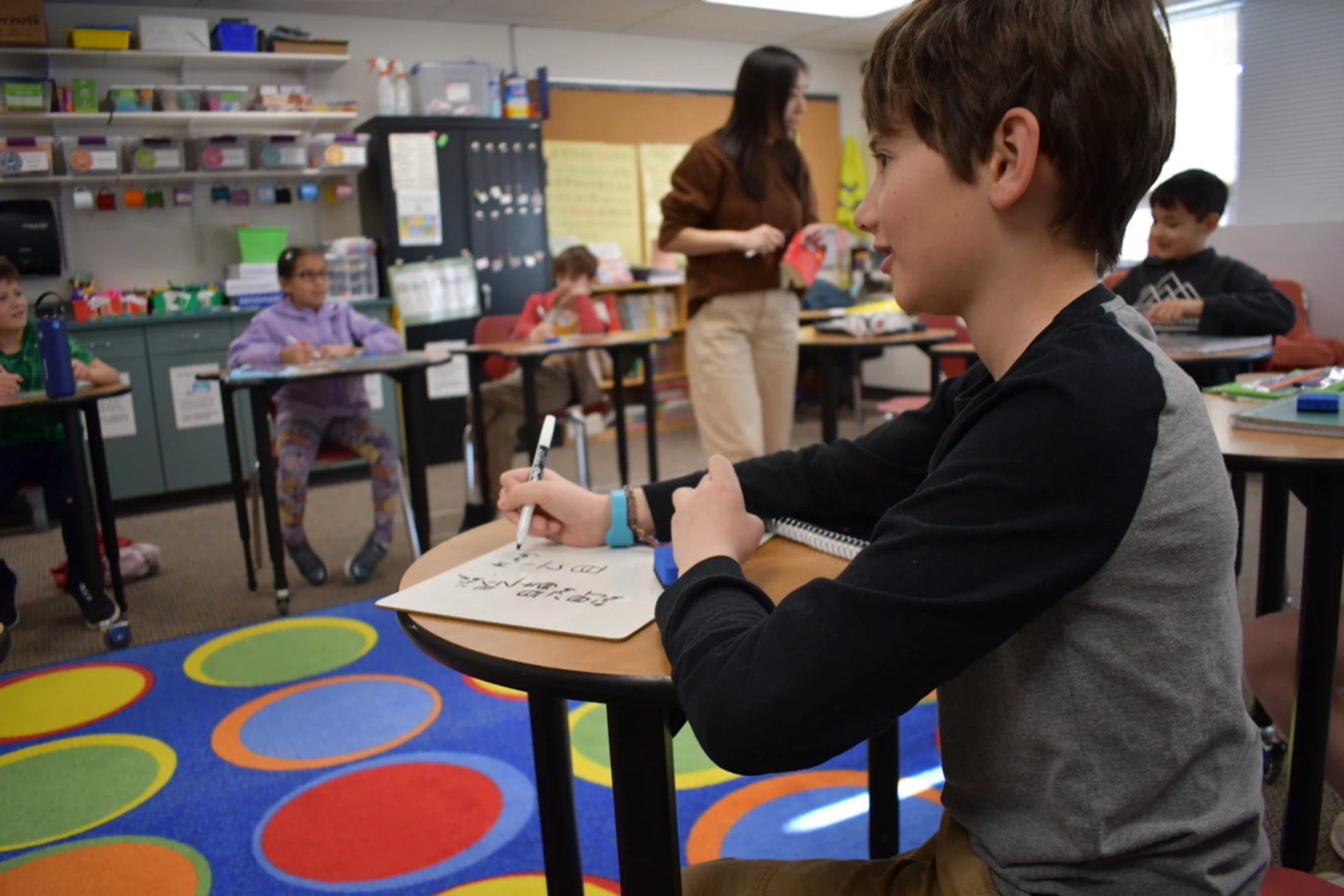
Our bilingual education model is progressive, starting with intense immersion in the early years, approaching a 50/50 instructional model in grades 4 and 5, and ending with a solid emphasis on English while maintaining focused, high-level target language in Middle School. Drill down by ages below:
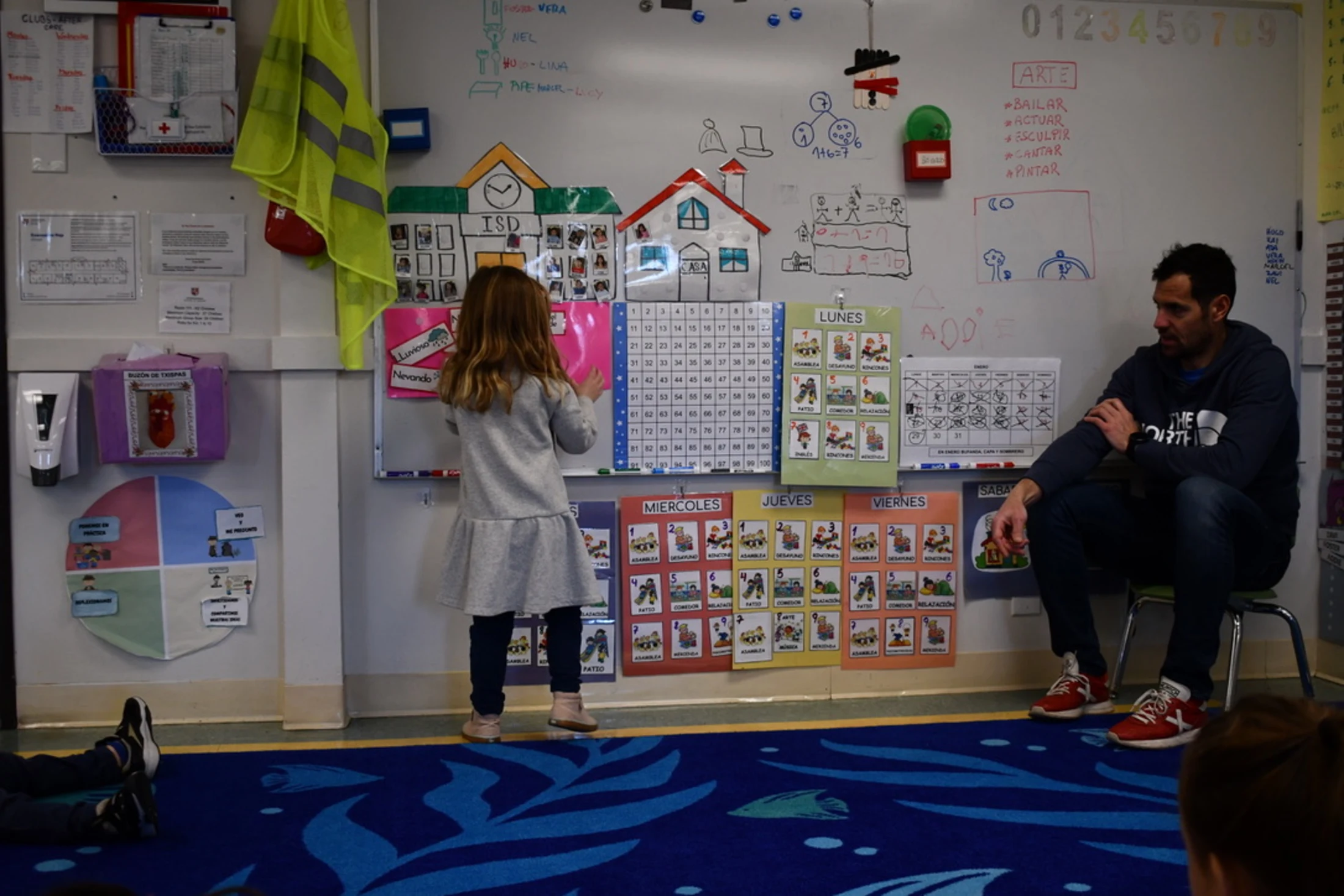
In Kinder 1 (K1) and Kinder 2 (K2), learning is almost entirely in the target language (97%) with the exception of three lessons each week in English (approximately 2 hours total) that include instruction for language arts, fine arts, and music.
In Kinder 3 (K3, aka Kindergarten), ISCreson incorporates additional time in English to build the foundation for writing and reading in English, as well as in the target language (90%/10%). Linguistic research indicates that for bilingual education to succeed, both languages must have the same status for children, even if English is used less in the classroom. By incorporating both languages in the classroom, students view them with equal status—they are equally viewed as “languages of school.”
Children acquire bilingual skills through activities and play that set the foundation for future learning processes. Because the best time to acquire an additional language is between the ages of three and six, language acquisition is very natural at the K1 – K3 stage. All subjects—math, science, art, English, history, music, physical education and social studies—are studied at age-appropriate levels in the target language, starting as early as 3 years old in this first cycle. Students are not simply learning French, Chinese, or Spanish, but rather, they are learning all traditional school subjects in and through French, Chinese, or Spanish.
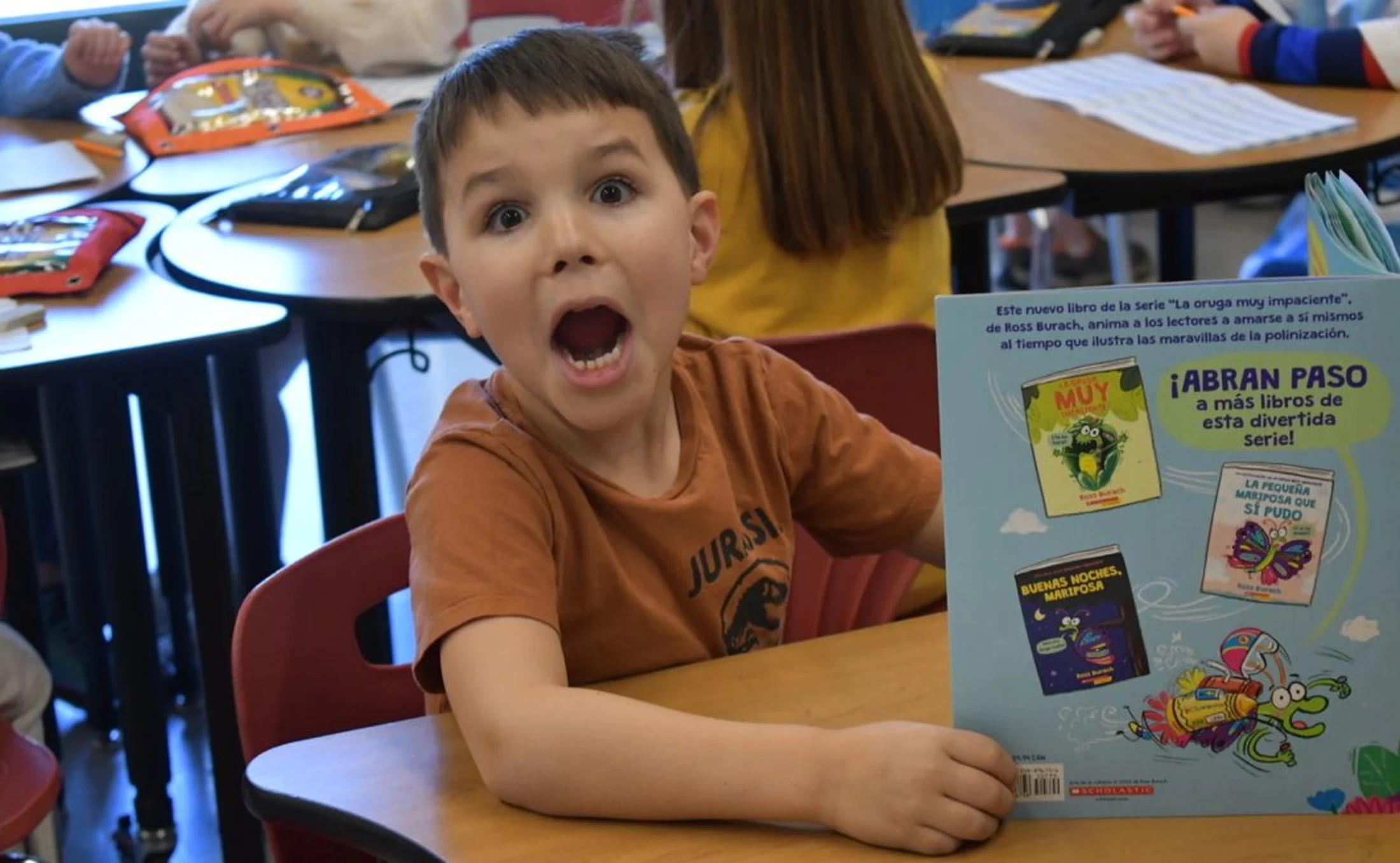
In Grades 1 and 2, learners spend 80% of the school week solidifying their knowledge-base in the target language.
-
English is explicitly taught one period a day, to enrich and support the instruction of the immersion language.
-
A period of team teaching (with both the child’s English teacher and target language teacher) is also taught one period a day, and helps to support the immersion language and conceptual understanding of our units of enquiry.
-
Team teaching supports the benefits of language acquisition through the use of translanguaging, which is a planned and systematic use of two languages inside the same lesson by specifying and varying languages of input and output (Lewis, Jones, Baker 2012)
-
-
Time spent learning in and through English increases to foster a heightened focus on English language and literacy skills, music, art, and science-based global projects (iSTEAM)
-
All subjects, including math and science, continue to be studied in the target language of French, Chinese, or Spanish.
-
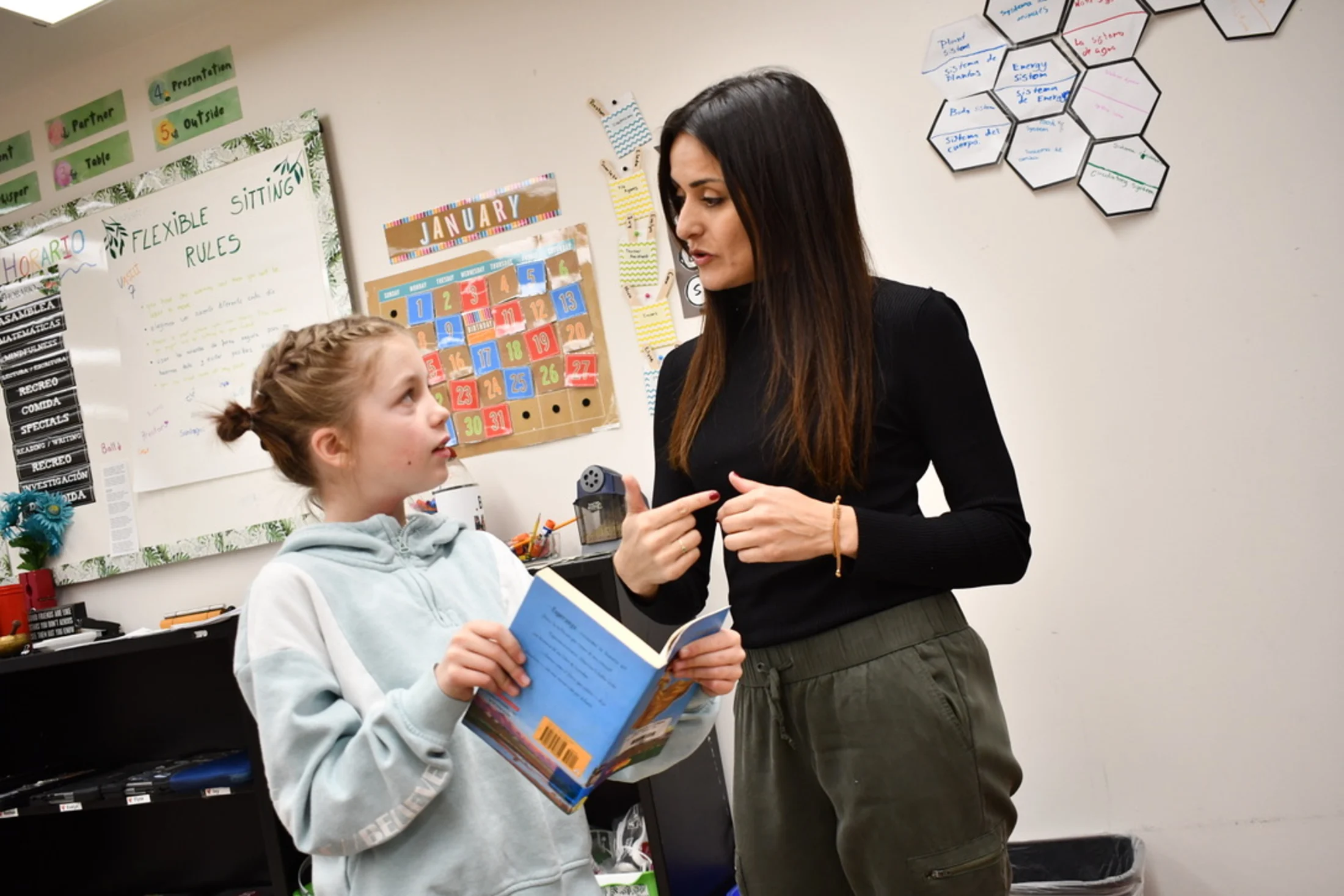
In Grades 3, 4 and 5, learners expand their study of both the target language and English. Students become truly bilingual at this stage, and may also be introduced to a third language that can be studied in an optional, after-school program in Grades 3, 4, and 5, with the option to continue that language of instruction in the Middle Years Programme (Grades 6, 7, and 8)
-
Instruction in English accounts for approximately half of the time spent in class by grades 4 and 5, and a 60/40 model in grade 3. This is done with a team teaching model, meaning that both of the child's homeroom teachers are in the classroom, together, for most of the day.
-
Team teaching supports the benefits of language acquisition through the use of translanguaging, which is a planned and systematic use of two languages inside the same lesson by specifying and varying languages of input and output (Lewis, Jones, Baker 2012). Decades of research has demonstrated the benefits of co-teaching for teachers and students alike, with students demonstrating gains in academics, study skills, and social emotional well-being (Oh-young & Filler, 2015). The learning of science, social studies, and math in English complements and augments the instruction of these subjects in the target language.
-
All subjects, including math and science, continue to be studied in the target language of French, Chinese, or Spanish.
-
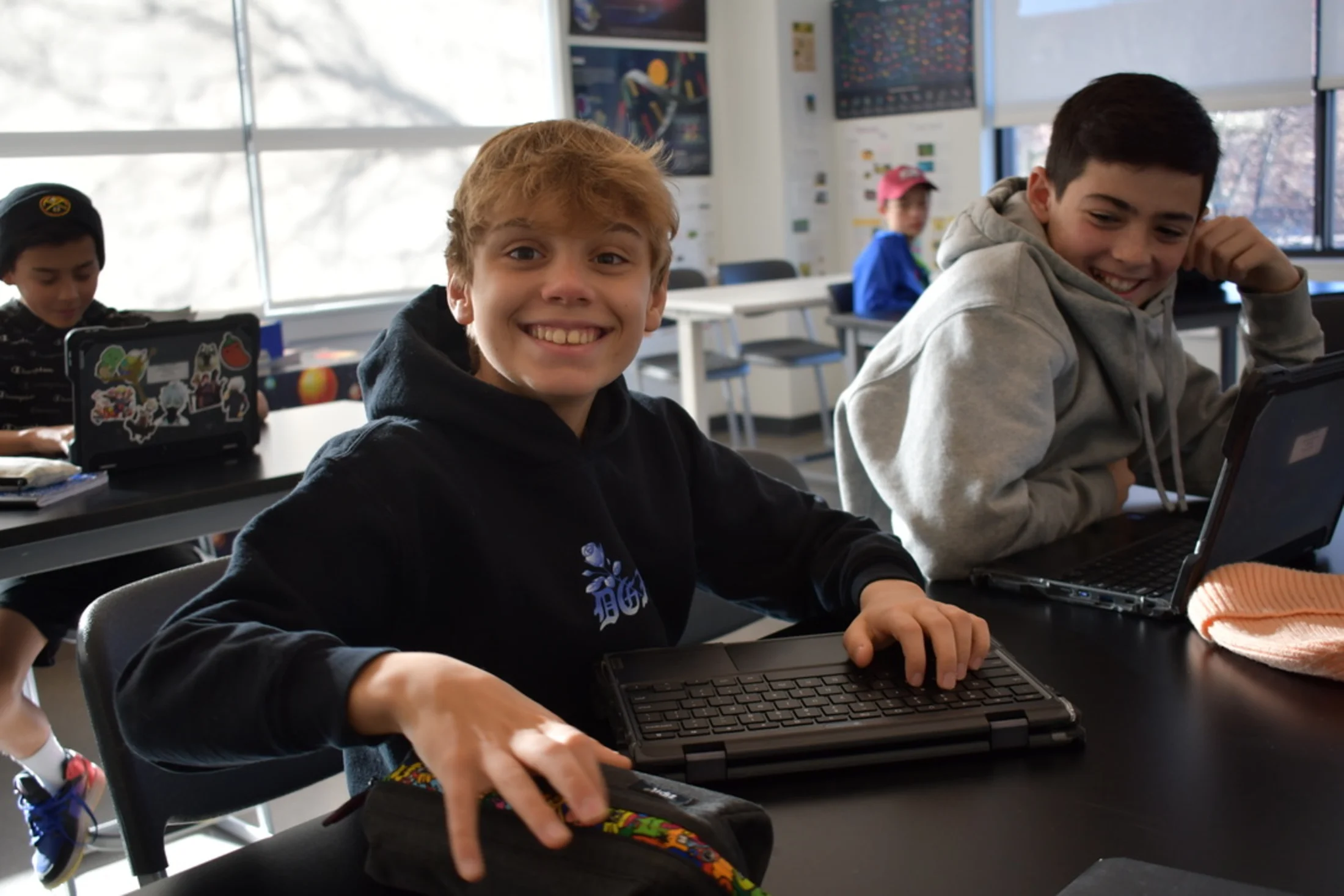
ISCreson’s Middle School is an authorized International Baccalaureate (IB) School implementing the Middle Years Programme (MYP) in grades 6, 7, and 8. During this cycle, MYP learners continue to develop the academic, technological, social emotional, and ethical skills that prepare them to succeed in high school, college, and beyond. A strong set of values is consistently woven throughout the middle school academics, building critical thinkers and responsible global citizens.
-
Following the IB Middle Years Programme model, learners now study in more structured periods: approximately 28 periods per week are taught in English, with the remaining 7-10 periods dedicated to language acquisition in French, Spanish, or Chinese. ISCreson is the only middle school—public or private—in the Creson region offering the International Baccalaureate Middle Years Programme with this level of language acquisition instruction. At ISCreson, language is not taught as a “second” language only a few periods a week, but rather through immersion, accounting for 20-30% of the school week.
-
There are two tracks for language acquisition instruction in MYP—the Novice Track, for new language learners or those who want to continue with their 3rd language in MYP, and the Advanced Track for students continuing in their target language from our elementary immersion program. All language instruction continues to be taught by native speakers.
Why the ISCreson Teaching and Learning Method
Research is debunking the previously held approaches to immersion education and giving way to methodologies that should be shaping the way that we as language school educators think and teach. International School of Creson Head of School, Bob Carig, underscores new research that has helped inform our Admissions policy as well as pedagogy at the International School of Creson. The student outcomes and data of the approach are compelling.
Read More...