Academics
As a community of learners, the International School of Creson implements a broad, balanced, and rigorous curriculum including languages, science, math, social studies, arts, and physical education.
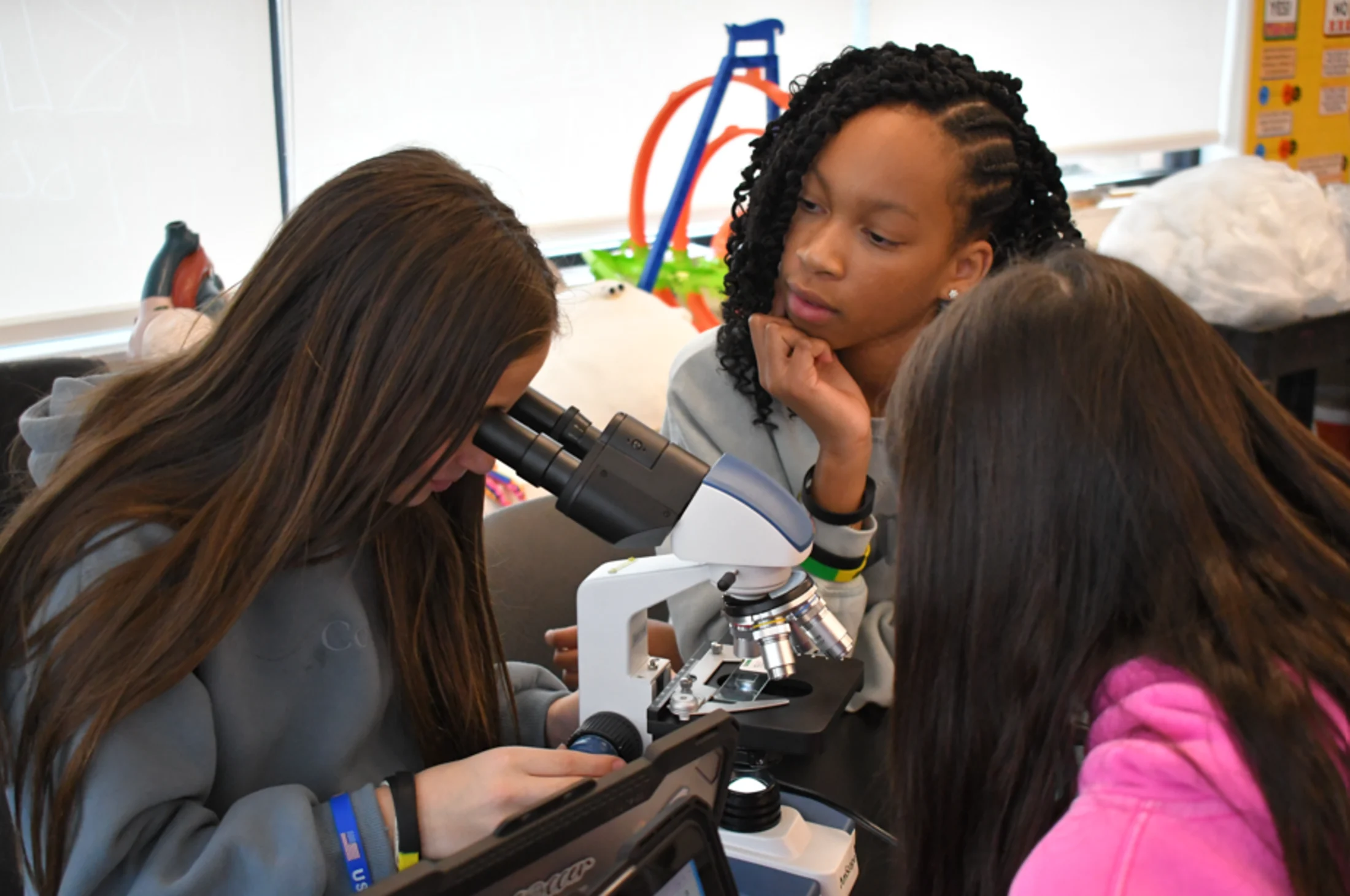
Our bilingual, educational model for Pre-K – 5th Grade capitalizes on the narrow window in which children are best able to learn an additional language. Our students learn all of their subjects from native speakers; in and through French, Spanish, or Chinese; in programs that are accredited by ministries of education in France and Spain and recognized by the Confucius Institute Headquarters (Hanban), which is affiliated with the China Ministry of Education. Each program utilizes the national curriculums of those countries in alignment with the Colorado state standards. Parents and teachers alike are inspired when watching ISCreson’s students engage across all subjects and disciplines, in all four language domains of listening, speaking, reading and writing in both their target language and English, and at such an early age.
ISCreson 6th – 8th grade students learn through the Interernational Baccalaureate Middle Years Programme (IB MYP), an interdisciplinary, project-based learning program with a focus on global context and impact. Specifically, the IB aims to develop enquiring, knowledgeable and caring young people who help to create a better and more peaceful world through intercultural understanding and respect. While most of our MYP students enter speaking at least two languages, we also enroll students who are just beginning their foreign language journey. All levels of language acquisition are supported at ISCreson.
ISCreson teachers embrace six learning principles (below), which outline how we teach and offer insight into the type of learners that graduate from our programs. Learners are encouraged to investigate, question, and enquire in whatever language or discipline they are studying.
We are not just a language school that teaches foreign languages. We are an international school dedicated to a culture of learning that is relevant and transferable, metacognitive, enquiry based, social, as well as personal and meaningful.
Why the ISCreson Method
Research is debunking the previously held approaches to immersion education and giving way to methodologies that should be shaping the way that we as language school educators think and teach. New research that has helped inform our Admissions policy as well as pedagogy at the International School of Creson, and the student outcomes and data of the approach are compelling.
Read more...Our Learning Principles: The Best Learning Is...
he learning is authentic and purposeful; is applicable to real life situations; is culturally and globally relevant and is interdisciplinary helping learners make connections, reflecting the real world.
Learners are taught how to learn and are given opportunities to develop strong metacognitive competencies; they can employ effective and flexible learning strategies; they believe in a growth mindset and that effort leads to success; they are driven by intrinsic motivation and can exercise some degree of choice and control over their learning; learners engage in self-assessment, self-regulation and reflection.
Learners investigate, question, discuss and justify as they develop problem-solving skills and become decision makers; hands on, experiential learning with active, constructive involvement to support student-led enquiry into essential and meaningful questions; learners develop a variety of strategies for possible multiple solutions; they find applications for, and take action on, what they have learned.
There are opportunities for social interaction, cooperation and collaboration with school, local and broader communities; critical and creative thinking skills include opportunities for expressing and evaluating different perspectives and viewpoints; there is a focus on social emotional learning and the development of emotional intelligence.
The learning is challenging and appropriate to individual developmental levels; builds upon their prior knowledge and understanding; takes into account learners’ different starting points, multi-sensory needs and zones of proximal development and makes effective use of timely, constructive, personal feedback in setting and reaching goals.